
RIM had a chance to take back the market, but it appears the company will not be successful. Now we look to other competitors to take up the battle against Apple.
[ad#Google Adsense 300×250 in story]The most likely candidate now is webOS. Originally developed by Palm, under the leadership of ex-Apple executive Jon Rubinstein, webOS features a very user-friendly graphical user interface. In a lot of ways, the operating system is the most Apple-like on the market.
webOS is also complimented on its multitasking capabilities, so there is more to it than just a pretty face.
The strength of webOS was one of the leading factors in HP purchasing Palm in April 2010.
PreCentral.net has a detailed look at webOS 3.0, which hasn’t been released yet, and it looks promising. The operating system is about two years old now, so it’s maturing, not brand new. It’s obviously a big advantage to market a mature working OS, instead of trying to convince people to trust a new operating system.
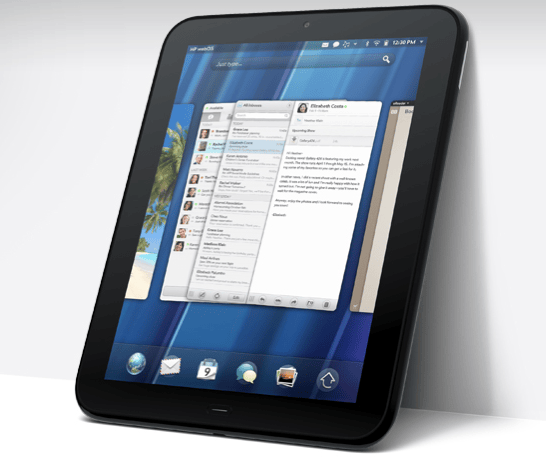 HP said that it will release the webOS-based TouchPad to compete with Apple’s iPad later this year. That will be an interesting entry into the market.
The HP/Palm combination can build hardware and software, but there are still some things missing from the equation. HP doesn’t have the access to audio and video that Apple does, and it certainly does have the integration. Those are problems for HP.
HP also doesn’t have apps, but the company took a big step to fill that shortfall in February. It hired another former Apple executive, Richard Kerris, as its new vice president of Worldwide Developer Relations.
It will be interesting to see how all of this plays out.
It is important to remember though, that while all of these iPad competitors struggle to release their products, Apple continues to develop new iPads. Seems like an uphill battle for everyone.
Now this is something I’m looking forward to seeing. Especially after having watched a couple of people use Pre phones last year. They looked like nice intermediate devices for people who were moving up from “feature” phones. I’d very much like to know if that’s the intention for the platform.
The TouchPad and webOS 3.0 does look good.
webOS looks like a great market for a developer who has software ready to go from day 1. There are a lot of anything-but-Apple people who will snatch this up as soon as it’s available and they’re going to want to download some apps. I don’t know why, but I get the feeling that webOS users are more likely than Android users to spend over $20 at the app store.
I’m convinced that the vast majority of consumers that are buying other phones and operating systems other than webOs have not even tried it OR perhaps feeling sabotaged and restricted to their carrier. I own the three major mobile operating systems, iPad, Android and Palm Pre, WebOs is far the best and dynamic. What annoys me the most are iPhone fanboys are still in denial. Too much bragging about their phone and they don’t realize that I can operate their phone better than them because I’m a power user of the OS4 with my iPad. I experience this all the time!
Excuse me, but exactly what “fail” are you talking about?
RIM’s product rejuvenation will be a long-term process that already looks very promising.
Methinks Dalrymple doth protest too much.
HP is gonna blow it, RIM already has. Android will lose momentum, especially as Apple continues to innovate. HP can’t even make decent laptops- Web OS will not get a fair shake.
HP has a shot at doing well with webOS. They aren’t treating it like a mobile OS and plan on putting it on their PCs as well. How well they do depends on how the leverage their vertical market customers. That is something Apple doesn’t make a large part of their discussed strategy so HP has the ability to market on that. Providing full enterprise solutions with phone and tablet services will be tempting to corporations. Provide PBX to cellular capabilities in webOS and they could have a home run.
While apple is a competitor to HP, their biggest threats though is Google and Microsoft. Those three will be competing over the stagnant corporate marketplace.
You’d probably have more credibility if you were to describe why you believe WebOS is be better, etc. From my perspective, there is no mobile OS that is better than all others at everything. Sure, WebOS does notifications better. Yes, the ability to do true application multitasking is nice, but iOS is far more practical in terms of preserving battery life. Further, WebOS simply feels sluggish as compared to iOS with even basic things like scrolling and pinch / zoom functionality. The WebOS SDK is significantly behind what’s available for iOS, etc. There are clearly trade-offs. That said, I’d welcome a debate as to why you think WebOS is somehow better.
I do agree that WebOS is the most worthy competitor from a design perspective. However, with zero market momentum, it’s hard to see a scenario where WebOS doesn’t come off as just another also-ran product. The market has room of a few players, but the “anything but Apple” crowd is already firmly entrenched in Android. RIM looks like it will mis-step, but it still has a nice market to draw from. Windows Phone 7 is getting a boost from Nokia presumably. WebOS is nice, but nothing revolutionary enough to get much attention beyond it’s initial release. Web based apps are fine for simple things, but they won’t cut it for games, etc. It’s funny how WebOS fans seem to ignore how things panned out for them on their first go around. I see little reason to expect things to turn out much different this time around, despite the fact that they have a competent OS.
The Pre is essentially two years old, so I can see it could be compared to an intermediate device. It’s a little like AT&T marketing the iPhone 3 for $49 now.
The Pre3 coming down the pike is intended to compete with the high end Android and iPhones. It will probably be a shade off spec-wise (not have the resolution of the iPhone 4 for example), but with multitasking, inductive charging and such, it could be seen by some as a competitive phone. This would also depend on what Apple and Android have coming down the pike later this year too.
However HP tries to position it, I’ll be very interested to see the new Pre’s capabilities.
I don’t think Efit Tracker said or implied that webOS was “better than all others at everything”, but instead claimed “WebOs is far the best and dynamic.” I view that mean that is the best overall taking all the trade-offs into account (at least in the opinion of Efit Tracker).
I own a Palm Pre and the battery life was equivalent as what other iPhone owners were claiming. Still it was important for me to go 2-3 days without charging, so I bought a 2250 MaH after market battery on Ebay for around $10 or 15. Others have the option to switch out batteries if they wish, which I regard as a positive when talking about battery life.
The market momentum is related to the release of new exciting hardware – which hasn’t happened for webOS since the new release (the Plus wasn’t exciting, and the Pre 2 was released in the US after HP announced the conference to talk about new devices). The original Pre’s may be considered also-ran products, but one shouldn’t conclude webOS is. This article is one example how webOS is very different than the Pre. We don’t measure Android today by what Android 1.4 was two years ago.
It’s worth noting that webOS can and does do games without relying on a web-based apps. For example Angry Birds is available on webOS. So you have the plus of using web-based apps for the simple things and the ability to port iOS games easily (one developer notably did it in 24 hours from unboxing a Pre to getting the development environment running to getting it up and running). Over time HTML5 is going to open up the door to more complex applications on the web and they’ll easily port over to webOS. This will save developers a ton of time and effort.
It’s easy for webOS fans to ignore how things panned out the first time around because they were a smaller company with smaller scale, and horrible marketing. The small company and scale problem has been fixed with HP. They now have access to a lot of enterprise customers that they didn’t have before. The marketing is fixable (the question is will they fix it?).
It seems very short-sighted to claim that just because something didn’t work the past, a completely different and better approach in the present might not work.
There aren’t a lot of anything-but-Apple people. That is why iPad 2 has sold millions and Motorola XOOM, which came out a month earlier, has sold 100,000. Motorola did a Superbowl ad that dissed Apple and still sold only 100,000.
Yeah, WebOS is pretty nice. Too bad it has no apps.
The best news at HP’s recent WebOS event was that they will be opening up a native C API and making it fairly easy for developers to port iOS apps over to WebOS.
WebOS can’t possibly be the best overall because it has no apps. These are app phones.
Running HTML5 is not a feature. Everyone runs HTML5 except Microsoft. Everyone uses Apple’s Web engine except Microsoft. The best HTML5 platform is still iOS. If you don’t ever use App Store, you still have more apps available to you on iOS than on WebOS, and they run better on iOS also.
> Over time HTML5 is going to open up the door to more complex applications
> on the web and they’ll easily port over to webOS. This will save developers
> a ton of time and effort.
No, that is total BS. That is marketing drivel Palm used to excuse their lack of a C API.
First of all, what is on the Web is already on the Web. You don’t need to port it to WebOS or any other OS. It already runs in Apple WebKit. It already installs locally and runs on dozens or hundreds of devices. You don’t want to tailor it for WebOS. If WebOS can’t just install the cross-platform app from the server like iOS then that is a flaw in WebOS, not a feature.
Secondly, most of the world’s client apps (as opposed to client/server apps on the Web) are written in C. The thing that saves developers time is when they can bring their C code from another platform such as PlayStation or Mac over to a new platform and reuse 90% of it. That is why, for example, iOS has DOOM from DOS, or Keynote from Mac. The developers hardly had to write any code (which takes a ton of time) they only had to write an iOS wrapper around their existing C code. The biggest flaw in Android is the C API is closed … 3rd party developers have to write in Java for a virtual machine. They have to rewrite C apps entirely in Java so they can run slower and take up more battery on the device.
What saves developers time is to make a really world class bug-free HTML5 environment (like on iOS) and a really world class bug-free C environment (like on iOS) and that is why you see iOS has not only by far the most popular and diverse native C app platform but also the most popular and diverse HTML5 Web app platform. All of those HTML5 Web apps should be able to run on all mobiles (except Microsoft) because they all use Apple WebKit, the HTML5 engine from OS X, but the implementations on all platforms other than Apple are terribly buggy, a total disaster. The biggest disappointment (among many) on Android v3 was the HTML5 platform is horribly broken.
Basically, Apple has done everything right when it comes to development. They are the only mobile running a full C API (3rd party developers use the same tools and API’s that Apple uses to make built-in apps and iOS itself) and they have the best implementation of the HTML5 API. Their success with developers comes entirely from that. Even when iOS had a tiny installed base, it had the most developer interest.
HP has a chance to be #2 if they work their butt off. But they are not doing anything better than Apple right now, and not in the past 2 years at Palm.
HP doesn’t have their own PC’s. They just make PC’s for Microsoft. Saying that HP has its own PC is like saying Foxconn has its own iPhone. Why is WebOS on those Windows PC’s going to be any more effective than Java, which has been on there for about 15 years and has been dead for the last 10.
Well it depends on the apps available. If HP can get its app developers to create WebOS versions of desktop productivity apps than it can succeed. All I am saying is they have the installed customer base and vertical markets to make it a success. Now, I don’t think that a company has to have dominant market share to be successful. For example, no one can Argue that Apple isn’t a successful company and they have never had a dominant marketshare.
I think the only chance any tablet other than the iPad has is if it is a truly open platform. Not open to manufacturers, but open to the customers. Corporations can deploy their own apps, without getting a corporate status from Apple and one where the OS updates can be applied to any current hardware, regardless of carrier or manufacturer.
Not that I think this would take down the iPad, but it would carve out a niche of those that don’t like Apple’s system.
This is another good looking tablet coming, which may also be every bit as good as the iPad or perhaps better? But I don’t think anyone will overtake the iPad in the tablet space, there are just too many Apple fanboys and Apple is marketed too well right now.
I don’t see how one can say RIM failed when the Playbook won’t be out for 2 more days? I think if RIM can steal any significant market share (say greater than 10%, just my number, no science behind it), from Apple, its a big hit with the PB.
Right now the iPad has I think somewhere in the neighborhood of 90% market share in tablets. Hell, thats even more dominant than Windows used in desktops/laptops! With recent tabs like the Xoom and now the Playbook, and soon to see this HP tab with WebOS, not really sure why so many are brainwashed by the Apple hype machine… but they are!
The current lack of integrated app or media store will slow HP down in the tablet market. Apple have a huge headstart and already have all the infrastructure necessary for the entire iOS ecosystem. People invest too much time and money into any given OS and the introduction of the TouchPad will be the same as the PlayBook and all the Android based tablets so far. A failure.