
You can pretty much count on many of the major companies copying whatever new product design Apple comes up with these days, but is that a satisfying way to do business?
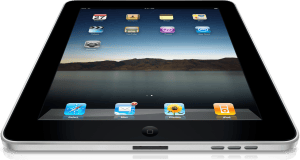 A few weeks ago I was surfing John Gruber’s Daring Fireball and saw a link for an upcoming ViewSonic Android Tablet. If that wasn’t enough to make me want to click, Gruber’s comment was.
“Reminds me of something, but I can’t quite put my finger on it.”
His obvious sarcasm made me check it out. Yes, you guessed right, it looks a lot like an iPad.
My 17-year-old daughter was sitting in the room watching TV, so I showed her the picture. I thought her comment was priceless.
“Aren’t they embarrassed to just copy Apple? If I owned that company and the best my people could give me was a copy of what Apple did, I’d fire them all!”
Of course, being copied is nothing new to Apple. Companies have been copying everything from the operating system to computers for years. These days, it’s popular to copy the iPhone and iPad designs.
I think the major players in the market have proven over the past few years that they are content to let Apple lead the way in the product design. That certainly gives Apple a huge advantage and one that they seem likely to keep for many years to come.
It’s hard to say whether Apple’s competitors are actually embarrassed to put out blatant copies of its products, but maybe creating confusion in the marketplace is the new high-tech business plan.
Your daughter makes a good point, but there are numerous levels of awareness amongst humanoids, the lower range of which don’t even perceive such feelings as “embarrassment.” Companies made up of such, then, most likely will find customers who will buy such knockoffs, not only without embarrassment, but with “satisfaction” over having gotten yet another gadget “for cheap.”
What I find so interesting is the companies who try to reverse engineer Apple products and software and do such a TERRIBLE job of it. It would not take a panel of genius’ to sit down and list all the best features of the iPhone or iPad and then the things that are missing and make something better. But, look at Android or Windows Mobile – these mobile OS suck. Now, people can talk until they are blue in the face about the Android tablet but it doesn’t exist. They can barely get Android to work on smartphone handsets but they certainly have not achieved a real shipping version of Android running on a tablet. It’s all vaporware at this point. And why won’t Google maximize its strengths? What is Google known for? Not hardware. If you said hardware, BIZZZZZ, you’re wrong. It’s cloud computing. Google and Android should have all kinds of mobile computing features based on their lead with cloud computing but its not there. With all hyped talk about competition producing innovation – I don’t see the innovations that Google, Nokia, Sony, Motorola, Microsoft, Dell, HP, Palm, Viewsonic, etc. are bringing to the table. They all just seem to be weak imitations of Apple. Why is that?
A friend showed me her new “smartphone” last month. I didn’t bother to see which one it was. She was showing me how she could scroll a web page by flicking her finger. The parts of the page that scrolled into view were just a grey checkerboard for a while before being rendered. As she was showing this to me, she gushed “Isn’t this great?”. This is a person who has a PhD and is department chair at a state college and is someone for whom I have great affection and respect.
I still don’t know how to interpret this. Is Apple screwed because people’s expectations have been driven so low through years of Windows and crappy phones?
They should be embarrassed not at copying Apple but at copying so BADLY.
It would save on R&D costs to just copy whatever successful product that Apple has. It may be practical to do but it also seems fairly pathetic. If I had a company and thought I could make a good living by just copying Apple products, I’d probably do it. I suppose that’s the whole concept behind knock-off items. You’ll never be a leader, but what the hell, it’s all about making the green without the associated risks.
I think that Apple will try in the future to make their products copy-proof by using expensive manufacturing techniques and if some company tries to copy them, their knock-off product will basically end up falling apart. It’s going to be interesting to see how companies try to copy the new iPod Nano. I doubt it will be easy to achieve the same results. Most companies love to use plastic and Apple is heading towards exotic metals and precision machining. Good luck trying to cheaply copy that stuff.
Several points come to mind on the subject.
1: Yes, a company with integrity, and who perceived themselves as pioneering companies, should fee shame at such blatant copying. But how are they doing to out-design Apple? They can’t because what Apple does is wack away the features that are not absolutely necessary (come to think of it, that’s the right way to do a PowerPoint presentation too) until you get to the point of taking away anything diminishes the product.
2: It’s a blatant business practice to copy the competition. Look at the way car designs go. A Mercedes at one point had a distinctive look. Then all of a sudden you look around and then Toyota (and logically – Lexus) looks like it, Chevy has a car that badly apes it, and Hyundai has a direct knock-off. Even the Ford Taurus before it went out of production started looking like that rear end of a Mercedes. Same with other cars. They steal ideas from each other, and they try to make aerodynamic designs and their CAD programs only have so many curves built in I guess.
3: Most businesses have pride way down the list of the most important things to make sure they have. The only thing that really counts is the bottom line. So some marketing wonk whips up the cliché.
4: Steve Jobs misquotes a famous aphorism “Good artists borrow, but great artists steal.”
Here’s what wikipedia says about it:
“This is a favorite phrase of Jobs, but he is (mis)quoting Pablo Picasso. “Lesser artists borrow; great artists steal” is similarly attributed to Igor Stravinsky, but both sayings may well originate in T. S. Eliot’s dictum: “Immature poets imitate; mature poets steal; bad poets deface what they take, and good poets make it into something better, or at least something different.”
I think T. S. Eliot gets it right.
Your daughter is right on! It makes me laugh at the companies falling all over themselves to copy Apple…so pathetic. Can’t they innovate and come up with something original? That’s why I buy Apple products….I want my dollars going to reward innovation and great design. If Another company could come up with the next big thing…it was well designed, worked beyond my expectations, had a great intuitive UI and captured my imagination they’d get my dollars….but I’m just not seeing it anywhere else.
A less politically correct reader on the linked site called it an ‘iPad with Downs Syndrome’
I think in any industry you have innovators and you have the mainstream the innovators like Apple design products which don’t have a current competitor and the mainstream will then try to push out a similar product. It’s been about 6 months since the iPad has come out and we have still yet to see a device comparable. I played with some dodgy knock off touch screen device running android and it was horrid.
I was wondering.
Are apple just smarter in design by not just being better but by also really, and I mean really, understanding what is wrong with things. Pads/slates have been around for absolutely years, so Ive has been able to look at hundreds of prototypes on the market, tear them out bit by bit for what is wrong and then find the sweet spot.
So all these manufacturers banging out garbage in markets all before Apple joined (be it MP3 players, slates, phones) have directly provided Apple with billions of bucks worth of R&D that hasn’t cost them a dime in scribbles and construct because all they need to know is what is wrong. All this is available to other manufacturers as well, but Apple put more effort into eliminating all that is wrong to leave them with a demonstrably narrower set of choices for what is right.
Breaking new ground like the antenna, the cube and hockey puck mouse could be examples of where there were not enough wrongs things to measure until it was too late. I would also put the G4 iMac on that list but I truly loved that design.
So yes they should be embarrassed about the copying of successful models, but they should be more embarrassed about their lack of purpose and direction. Apple has that in spades and their models are specifically designed to attain them. If another company came out with an identical pad and app store today they wouldn’t know what to do with it or where to take it as they have totally different business needs. If other companies actually understood their organisational mojo then true effective competition would prevail.
And then I stopped wondering and had a lie down.
Apple products are the result of a values system and culture that exists in Cupertino going back to the founding of the company. You can say the same for Google and Microsoft – their products, ideas and innovations reflect the culture they emerged out of and the times in which they live. And, I think, it is safe to say that the personalities of individuals have played a big role from Steve Wozniak to Jonathan Ives and, of course Steve Jobs not to Guy Kawasaki, Andy Hertzfeld, to Bill Atkinson and thousands of other Apple employees that seeded the company with ideas and innovations that have become the foundation stone of Apple.
First and foremost, Apple’s underlying design criteria is focused on the user experience and, as they used to say in the early days of Apple making “insanely great” products. The initial push for Apple was to create a graphical user interface that would make using a personal computer as easy, as Jobs said in those days, as operating a “toaster.” Icons, point and click, pop-down menus were all deployed toward this end – making the experience easier for the user and empowering them with a better tool. This over-riding approach to simplifying and making devices easier to use is still prominent at Apple today. Everyone at Apple who enters the front doors to go to work knows this is an underlying principle of the company and the reward and recognition for success is based on the ability to make better tools, easier and simpler to use by Apple customer base.
This is not true of companies like Microsoft, where a primary concern is gaining marketshare and employees are rewarded in stock options and bonus’ for their work on software projects that dominate the share of market in their category. They are not so much interested in innovation or design of new technologies as they are analyzing the market and providing enterprise solutions to business and corporate marketplaces. And, for the most part, Microsoft is good at satisfying their business model. But it is not directed at product design and innovation, it is not meant to satisfy individual end users, and its focus is not on the user experience as much as centralized control of technology in enterprise. Of course, I am being broad in this description and you have exceptions within Microsoft – for instance in their gaming division – but it has been an over riding paradigm within the company and by its employees to seek dominant marketshare either by license agreements, free distribution, piggy-back installs (that’s now Explorer overtook Netscape and became dominant in browsers).
Apple also emerged out of the valley and San Francisco computer hobbyist clubs in Northern California and this explains some of the vales expressed in iTunes music and Apps Store. It didn’t occur to other companies to provide a platform for hundreds of thousands of garage door companies to develop applications for their devices like the iPhone and iPad have done. If you want to talk about the failure of tablet computing going back to when Bill Gates heralded it in the year 2000, it is simply because Microsoft did not have the vision the propel and entire development community to write software to exist on this platform. In fact, Microsoft not only does not encourage small developers, they fear small developers of software will supplant them in the marketplace. But Apple grew up and out of the hobbyist software development community and they highly encourage third-party and open source developers to program for their devices.
There are a bunch of underlying values that define Apple as a company and make them unique from all others such as Dell, HP, Sony, RIM, IBM, Motorola, etc.
““This is a favorite phrase of Jobs, but he is (mis)quoting Pablo Picasso. “Lesser artists borrow; great artists steal” is similarly attributed to Igor Stravinsky, but both sayings may well originate in T. S. Eliot’s dictum: “Immature poets imitate; mature poets steal; bad poets deface what they take, and good poets make it into something better, or at least something different.””
Most people focus on the word “steal” and miss the point. Picasso/Stravinsky, Jobs and Eliot are all pointing out that “good” or “lesser” artists can at best only “borrow” an idea, and ultimately give it back to the original artist, as they cannot take that idea any further than the original artist. “Great” artists, or “mature” artists, “steal” an idea because they never give it back, because they’ve taken that kernel of an idea and brought it forward in an original way so that they now own it. It’s just like an iPod. There were other MP3 players before the iPod, but the iPod was so great, that afterward, all MP3 players were known as iPods, and at some point, noone will remember that there were MP3 players that existed before iPods. We’ll have to look at Wikipedia to find out what those devices were. Now it’s happening to tablets or slates or whatever you want to call it.
As long as we are nitpicking… Picasso’s quote is “Bad artists copy. Good artists steal.”
Yes, the emphasis can be placed on “bad” and “good” artists but equally the differences between “copy” and “steal.” To borrow is to obtain with the promise to return the same or an equivalent. To copy is “an imitation, reproduction, or transcript of an original”
Actually, as I pointed out, that quote by Picasso is not accurate.
It takes money to innovate. Companies run by their sales departments and the bottom line tend not to innovate.
Particularly these days, where MBAs are brought in to ‘streamline’ operations and reduce the bottom dollar, it is quicker and easier just to get rid of those areas which cost money, rather than make money. Engineering/software are generally the first to go.
I worked for a software company recently that reduced its development team from 30 people to 6, but expected that 6 to maintain the software (and hardware) quality. Needless to say, when quality dropped and devs started leaving, upper management started looking around for the MBA responsible for the decision. He’d resigned a month before, with a 300k bonus for ‘improving the bottom line’.
Needless to say, that company doesn’t exist anymore.
Apple is still the same Apple Way since Macintosh with a mouse that came with a 3.5″ diskette and a training tape on how to use the mouse (it was new and strange in 1984). Now, Apple invented a next level of user experience on iPhone and iPad with using fingers. I can’t say more on how excited I am to be in this side of technology and having people in Apple to make things more fun and easier for consumers. I still think Apple has huge advantage than others because they have the same mind on both hardwares and softwares. Because of this, a true experience of GUI is always with Apple products. This is the advantage Apple always had over other competitors. Apple have always wanted to produce more excitement, fun, fashionable and true GUI experience in all its products with its own way of branding and own way of creating its market. Whilst, to some following behind would be easier and still get some shares in the confusing market. Not all consumers are smarter than they thought.
There are analogies in other industries that I think fit the computer industry as well. For instance, in the world of wine you have two categories of producers: 1) the “suits” who simply want to move boxes of wine and make money and they feel safe making something blandly interesting to fit a category: red, white, pink, sparkling, etc. and then 2) the master vintners or sometimes called “wine men” who wish to lead the industry by being completely engrossed in the art or making wine. The suits own dozens and maybe hundreds to wineries that produce wines with no conviction or soul. Robert Mondovi leads the market and each year tried to make the finest wine that can possibly be made and hope people will buy it. This can also be applied to technology and computers. Apple seeks to lead the market; make really innovative cool, and incredibly designed devices and software and hope people buy it. Many others, the suits, produce products with no conviction, designed to suit the market and move inventory but they simply follow and do not lead.
Very well put, Robb!
Apple is not seeking to lead the market, they seek to make good products, rather others are choosing to follow Apple.
Thats right